Health calculator
BMI calculator (adult, CDC categories)
Type your height and weight. Peptade divides one by the other and places the result in the CDC's adult BMI categories — a quick screening number, not a diagnosis.
BMI calculator
Body mass index
—
Category (adult, CDC)
—
An estimate from a standard published formula, for general self-tracking only — not medical or dietary advice. Your needs may differ; ask a qualified professional.
Published by Peptade · Health calculator · Updated September 2026
Body mass index is your weight divided by the square of your height. It's one of the oldest and simplest screening numbers in general use, precisely because it needs nothing more than a scale and a tape measure.
CDC groups adult BMI into four bands — underweight, healthy weight, overweight and obesity — which this tool reports alongside your number.
The formula
BMI is weight in kilograms divided by height in meters, squared. The tool converts pounds and inches to metric behind the scenes if that's what you type, then does the same division either way.
The categories
For adults, CDC places a BMI under 18.5 in the underweight band, 18.5 up to 25 in the healthy weight band, 25 up to 30 in the overweight band, and 30 and above in the obesity band, which CDC further splits into three classes.
CDC is explicit that BMI does not directly measure body fat and doesn't distinguish fat from muscle or bone, though it correlates reasonably well with other measures of body fat at a population level. Two people with the same BMI can carry that weight very differently.
Track it, don't recalculate it.
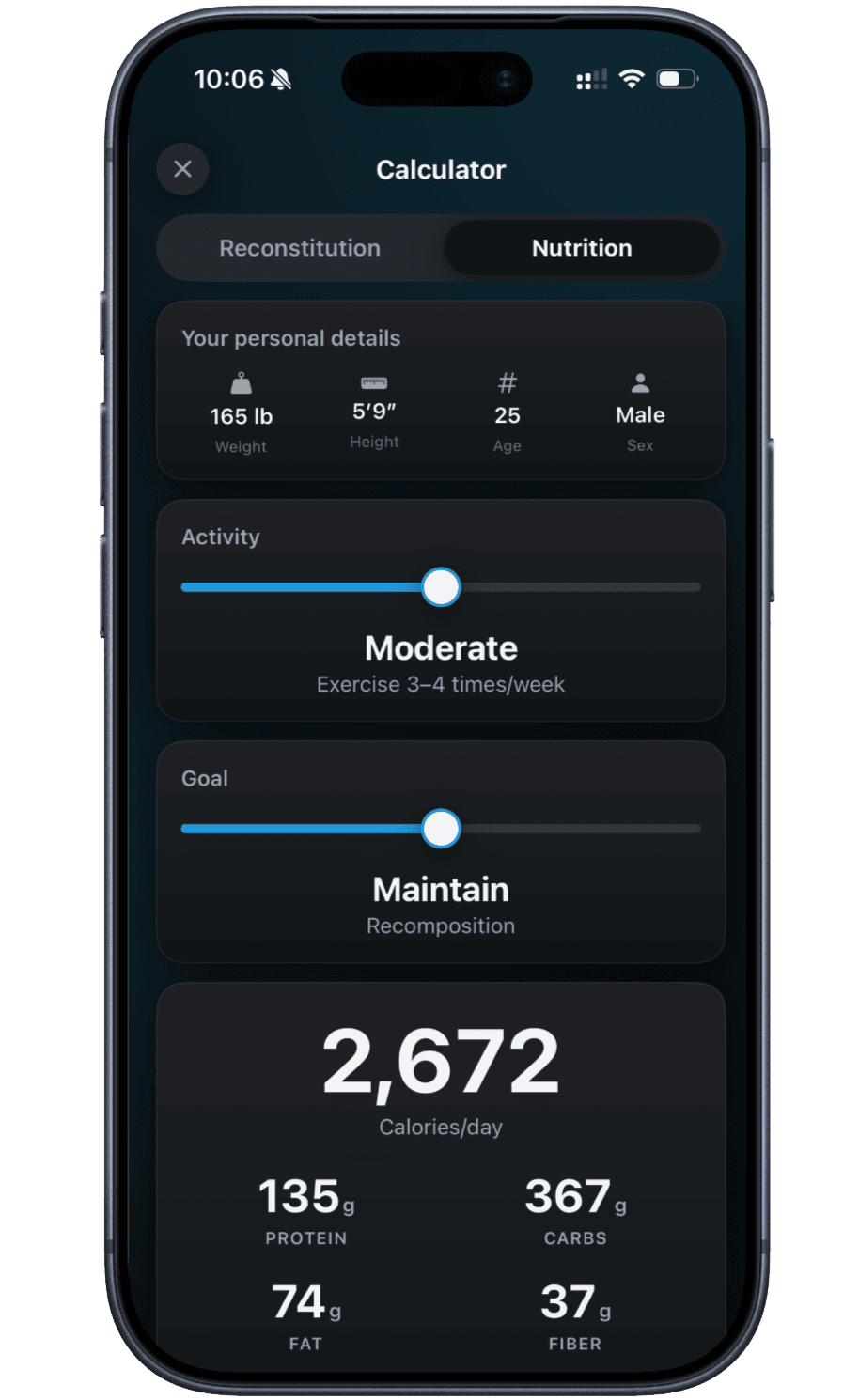
Peptade logs meals, water, weight, sleep and workouts next to your compounds, so the numbers build a trend on their own.
- Saved per compound
- Schedules, cycles and titrations
- Supply that counts down
Frequently asked questions
No. CDC describes it as a quick, inexpensive screening measure, not a diagnostic tool. It doesn't know your body composition — only your height and weight.
CDC further splits the obesity band into three classes — 30 up to 35, 35 up to 40, and 40 and above — for more detail than the four main bands give.
No, and CDC says so directly: BMI doesn't distinguish between fat, muscle and bone mass, so a very muscular person can land in a higher band without carrying excess body fat. The body fat calculator on this site uses a different method if that fits you better.
More free tools
- Health calculatorBody fat calculatorEstimate body fat percentage from neck, waist and height — plus hip, for women — using the U.S. Navy circumference method and its published accuracy.
- Health calculatorDaily calorie (TDEE) calculatorEstimate total daily energy expenditure from your age, weight, height and activity level using the Mifflin-St Jeor equation and CDC activity guidance.
- Health calculatorWeight loss percentage calculatorCalculate the percentage of body weight you've lost between two weigh-ins — the measure researchers use instead of raw pounds or kilograms.
- Weight trackerWeight Tracker with a Progress ChartLog a daily weigh-in in kg or lb, chart it over the range you pick, and see how far you are from a goal weight you set.
Nutrition, hydration, exercise and weight values are approximate and for general self-tracking only — not medical or dietary advice. If you have or suspect an eating disorder, a history of disordered eating, or any condition for which calorie or weight tracking could be harmful, consult a qualified healthcare professional before using these tools. See the Medical Disclaimer.