Health calculator
Protein calculator for GLP-1 users
Appetite often drops on a GLP-1 or GLP-1/GIP medicine, and protein is frequently the first thing to slip. Type your weight, and this calculator turns a published weight-loss protein range into daily grams.
GLP-1 protein calculator
Daily protein
—
Per kg of body weight
0.8g/kg
An estimate from a standard published formula, for general self-tracking only — not medical or dietary advice. Your needs may differ; ask a qualified professional.
Published by Peptade · Health calculator · Updated September 2026
Reduced appetite is one of the best-documented effects of GLP-1 and GLP-1/GIP medicines, and it can make it hard to eat enough of anything — protein included. A 2025 joint advisory from four U.S. medical and nutrition societies flags protein as something to plan for deliberately during treatment, precisely because appetite loss makes it easy to under-eat it.
This tool is the same unit conversion as the general protein calculator, with one range added: a target for active weight reduction, cited to that advisory. Type your weight, pick a range, and read off the grams.
The range this tool adds
A 2025 joint advisory from the American College of Lifestyle Medicine, the American Society for Nutrition, the Obesity Medicine Association and The Obesity Society proposes 1.2 to 1.6 g of protein per kilogram of body weight a day during active weight reduction, spread evenly across meals rather than eaten in one sitting.
The same advisory names a floor and a ceiling either side of that window: it flags intake below 0.4 to 0.5 g per kilogram as a risk to muscle, and prolonged intake at or above 2 g per kilogram as something to avoid. This tool only offers the range in between.
If you'd rather use the general range
The general protein calculator's two ranges — the baseline Recommended Dietary Allowance and the higher range for adults training to build muscle — work the same way and apply to you too. This page just adds the one range that's specific to GLP-1 and GLP-1/GIP therapy.
Track it, don't recalculate it.
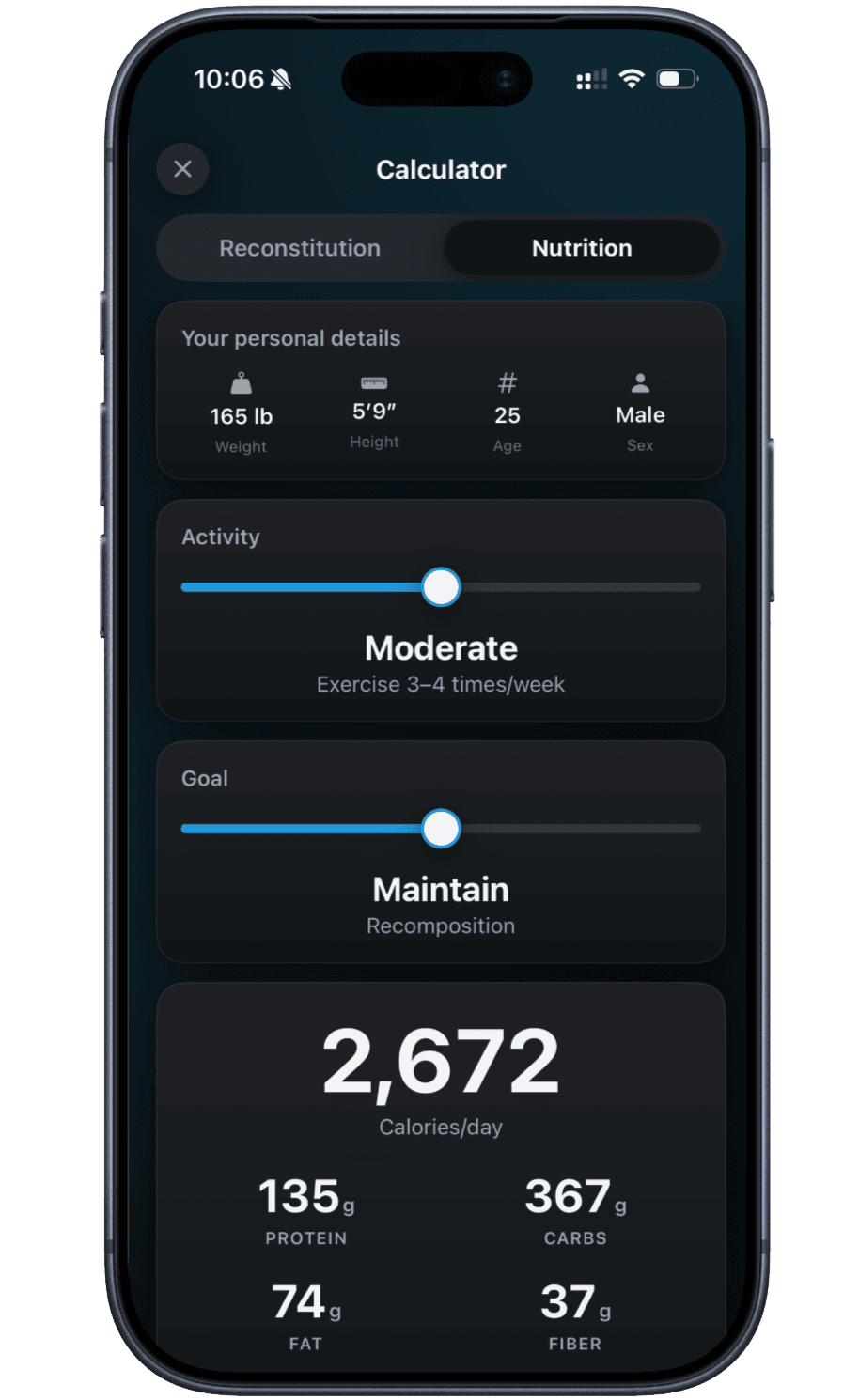
Peptade logs meals, water, weight, sleep and workouts next to your compounds, so the numbers build a trend on their own.
- Saved per compound
- Schedules, cycles and titrations
- Supply that counts down
Frequently asked questions
No. The calculator doesn't ask which medicine you use — it applies one published range to the weight you type, the same as it would for anyone in active weight reduction.
That's the exact problem the advisory is responding to — appetite loss makes the range harder to hit, not less relevant. Smaller, protein-forward meals spread through the day are often easier to finish than one large one; a registered dietitian can help you plan around a reduced appetite.
The advisory proposes it as a target during active weight reduction, and discusses it specifically in the context of GLP-1 and GLP-1/GIP therapy, where preserving muscle while losing fat is a stated priority.
More free tools
- Health calculatorDaily protein calculatorType your body weight and pick a general or active range to see a daily protein target in grams, backed by published nutrition research.
- Health calculatorDaily calorie (TDEE) calculatorEstimate total daily energy expenditure from your age, weight, height and activity level using the Mifflin-St Jeor equation and CDC activity guidance.
- GLP-1 trackerGLP-1 Tracker App for Doses & SupplyTrack semaglutide, tirzepatide or any GLP-1 with schedules, supply and history — built for the GLP-1 routine.
Nutrition, hydration, exercise and weight values are approximate and for general self-tracking only — not medical or dietary advice. If you have or suspect an eating disorder, a history of disordered eating, or any condition for which calorie or weight tracking could be harmful, consult a qualified healthcare professional before using these tools. See the Medical Disclaimer.